How to Fix Controller Not Detected on PC
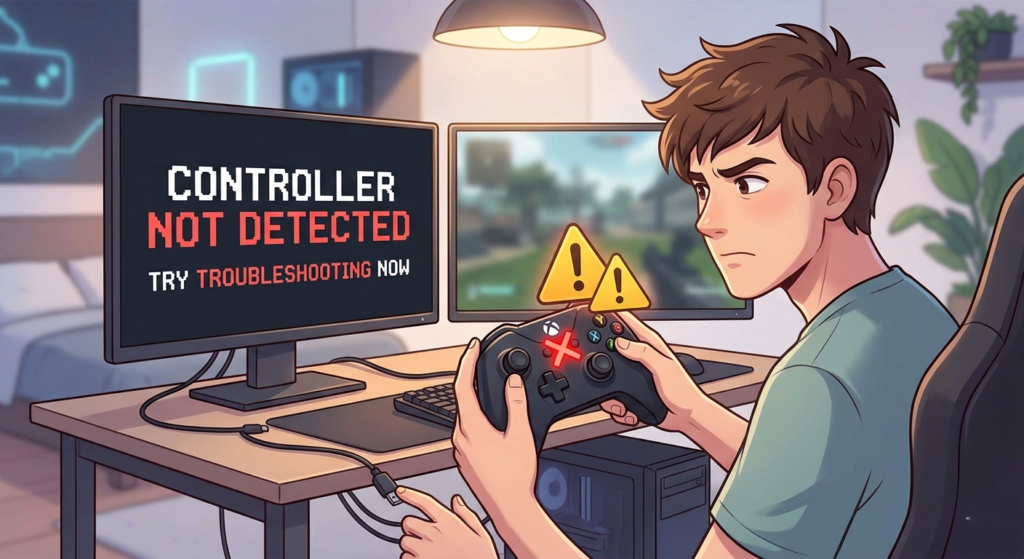
You sit down for a long gaming session, grab your controller, and… nothing. The game ignores your button presses. Your character stands still. It is one of the most frustrating ways to start your playtime. A controller that your PC refuses to detect can ruin your mood and waste precious gaming time.
In 2026, PC gaming controllers are more advanced than ever. They pack haptic feedback, adaptive triggers, and precise analog sticks. But all that technology means nothing if your computer cannot see the device. Whether you use an Xbox controller for PC, a PS5 controller PC, or a third party gamepad, connection problems can happen to anyone.
This guide will walk you through every possible fix for a controller that your PC refuses to detect. We will cover wired and wireless connections, driver issues, Bluetooth problems, and hidden Windows settings. By the end, you will know exactly how to get back in the game.
Why Controllers Sometimes Fail to Connect
Before jumping into fixes, it helps to understand why controllers stop being detected. The reasons usually fall into a few categories.
Hardware issues include faulty cables, dead batteries, broken USB ports, or physical damage to the controller itself. These are often the easiest to spot but can be easy to overlook.
Driver problems happen when Windows does not have the right software to talk to your controller. This is common with newer controllers or after major Windows updates.
Bluetooth interference can prevent wireless connections. Other devices, distance from the PC, or outdated Bluetooth drivers can all cause problems.
Power management settings in Windows sometimes turn off USB ports or Bluetooth adapters to save energy. This can disconnect your controller without warning.
Software conflicts occur when multiple programs try to control your gamepad at once. Steam, DS4Windows, and other utilities can fight over who gets to talk to the controller.
Quick Checks to Run First
Start with the simplest possible solutions. You might be surprised how often these work.
Check your batteries or charge. A controller with critically low power might not connect at all. Replace batteries or charge your controller fully before testing again.
Try a different USB cable. Many controllers use standard USB cables that can wear out or break internally. Swap to a known good cable, preferably one that supports data transfer, not just charging.
Test a different USB port. Some ports, especially on the front of a PC case, may not provide enough power. Try ports directly on the back of your computer.
Restart your PC. This sounds too simple, but it clears temporary glitches and resets all drivers and services. A restart fixes a surprising number of detection problems.
Connect to another device. Try your controller on a different PC, a laptop, or even a console if possible. This tells you whether the problem is with the controller or your specific computer.
Step by Step Fixes for Wired Controllers
If you are using a wired connection and your controller is not detected, follow these steps in order.
Check Device Manager for Recognition
Open Device Manager by right clicking the Start button and selecting it from the menu. Look for these categories:
- Human Interface Devices
- Sound, Video and Game Controllers
- Universal Serial Bus controllers
If you see your controller listed with a yellow warning icon, the driver is having problems. If you see an “Unknown Device,” Windows detects something but cannot identify it.
Right click any problematic device and select Properties to see error details. The error message often gives clues about what is wrong.
Update or Reinstall Drivers
For Xbox controllers, Windows usually handles drivers automatically. But sometimes a manual update helps.
- In Device Manager, right click your controller or any unknown device
- Select “Update driver”
- Choose “Search automatically for drivers”
- If that fails, try “Browse my computer for drivers” then “Let me pick”
- Look for the correct driver from the list
For PS5 controller PC connections, Windows may show it as a generic device. You might need additional software like DS4Windows for full functionality, but the basic connection should still work.
Disable USB Power Saving
Windows sometimes turns off USB ports to save power. This can disconnect controllers randomly or prevent detection entirely.
- Open Device Manager
- Expand “Universal Serial Bus controllers”
- Right click each “USB Root Hub” and select Properties
- Go to the Power Management tab
- Uncheck “Allow the computer to turn off this device to save power”
- Repeat for all USB Root Hub entries
- Restart your PC
Try Different USB Modes
Some controllers need specific USB modes to work correctly.
If you have a USB 3.0 port (usually blue inside), try a USB 2.0 port instead. Some older controllers have compatibility issues with USB 3.0.
For PS5 and PS4 controllers, try pressing the PlayStation button and Share button together for a few seconds to put the controller in pairing mode, then connect the USB cable.
Step by Step Fixes for Bluetooth Controllers
Wireless connections add another layer of complexity. Here is how to troubleshoot Bluetooth detection.
Remove and Re pair the Controller
Sometimes the Bluetooth pairing gets corrupted. Start fresh.
- Open Windows Settings (Windows key + I)
- Go to Bluetooth & Devices
- Find your controller in the list
- Click the three dots menu and select “Remove device”
- Put your controller in pairing mode
- Xbox controllers: Hold the pairing button on top until the Xbox button flashes
- PS5 controllers: Hold the PlayStation button and Share button until the light bar flashes
- Click “Add Bluetooth or other device” and select Bluetooth
- Choose your controller from the list
Check Bluetooth Adapter Status
If your PC has built in Bluetooth, make sure it is enabled and working.
- Open Device Manager
- Look for the Bluetooth section
- If you see a yellow warning, update the Bluetooth driver
- Right click your Bluetooth adapter and select Properties
- Check Power Management and uncheck power saving options
For desktop PCs without built in Bluetooth, your USB Bluetooth dongle might be the problem. Try a different USB port, preferably one directly on the motherboard at the back.
Reduce Wireless Interference
Bluetooth uses the 2.4 GHz frequency, which is crowded with Wi Fi, microwaves, and other devices.
- Move your PC and controller closer together
- Remove obstacles between them
- Turn off nearby Wi Fi devices temporarily to test
- Try using a USB extension cable for your Bluetooth dongle to move it away from the PC case
Update Bluetooth Drivers
Outdated Bluetooth drivers are a common cause of detection failures.
- Open Device Manager
- Expand Bluetooth
- Right click your Bluetooth adapter
- Select “Update driver”
- Choose “Search automatically for drivers”
- If Windows finds nothing, visit your PC or Bluetooth adapter manufacturer’s website for the latest driver
Using a Gamepad Tester for Diagnosis
Once your controller connects, even briefly, you need to confirm it is working correctly. This is where an online gamepad tester becomes invaluable.
A gamepad tester is a web based tool that shows every input from your controller in real time. It helps you verify that all buttons, sticks, and triggers are responding properly. This is especially useful after fixing a connection issue to ensure everything works before jumping back into a game.
You can visit The Gamepad Tester to check your controller. The tool works with any browser and requires no downloads. Just connect your controller, press any button, and watch the on screen display light up.
Using a tester helps you distinguish between connection problems and hardware failures. If the tester shows inputs correctly, your connection is fixed and any remaining issues are game specific. If the tester shows no input or erratic behavior, you may have deeper hardware problems.
Advanced Fixes for Stubborn Problems
If basic steps did not work, try these more advanced solutions.
Use Windows Built In Troubleshooter
Windows includes automated troubleshooters that can fix common hardware problems.
- Open Windows Settings
- Go to System > Troubleshoot > Other troubleshooters
- Find “Bluetooth” and run the troubleshooter
- Find “Hardware and Devices” and run that one too
- Follow the on screen instructions
Check for Windows Updates
Microsoft regularly releases updates that improve controller compatibility, especially for newer devices.
- Open Windows Settings
- Go to Windows Update
- Check for updates and install any available
- Also check “Advanced options” > “Optional updates” for driver updates
Update Controller Firmware
Many modern controllers can receive firmware updates that fix bugs and improve compatibility.
- Xbox controllers: Use the Xbox Accessories app from the Microsoft Store
- PS5 controllers: Connect to a PlayStation console or use the Firmware Updater tool on PC
- Third party controllers: Check the manufacturer’s website for update tools
Disable Conflicting Software
Multiple controller programs can interfere with each other.
- Close Steam completely if you are not using it
- Exit DS4Windows, reWASD, or other controller mapping tools
- Disable any overlay software like Discord overlay or NVIDIA GeForce Experience
- Try connecting with all such software closed, then reopen one at a time
Check BIOS Settings
Some motherboards have USB settings in the BIOS that affect controller detection.
- Restart your PC and press the key to enter BIOS (usually Del, F2, or F12)
- Look for USB configuration settings
- Ensure USB controllers are enabled
- Disable any “Legacy USB” or “USB Legacy Support” options if they cause problems
- Save and exit
When to Consider Hardware Replacement
Sometimes the problem is not fixable with software. Here are signs that your controller may need replacement.
Physical damage like broken USB ports, cracked circuit boards, or liquid damage usually means the controller is beyond economical repair.
Battery failure in rechargeable controllers can prevent connection even when plugged in. If the controller only works with batteries removed or shows no signs of life, the battery may need replacement.
Bluetooth radio failure happens occasionally. If your controller pairs with other devices but not your PC, and your PC pairs with other Bluetooth devices, the controller’s wireless hardware may be failing.
Wear and tear after years of use can cause intermittent connections. If your controller connects sometimes but not others, and you have tried every fix, it might be time for a new one.
Preventing Future Detection Problems
Once you have your controller working, take these steps to avoid future issues.
Keep drivers updated. Set a reminder to check for driver updates every few months, especially after major Windows updates.
Use quality cables. Cheap USB cables often fail to maintain stable connections. Invest in good quality, braided cables from reputable brands.
Manage Bluetooth devices. Remove old paired devices you no longer use to reduce confusion when connecting.
Create a dedicated USB port. If you always use the same controller, designate one USB port for it and avoid unplugging other devices from that port.
Test regularly. Use a gamepad tester every few weeks to catch developing problems early. This is especially important before competitive gaming sessions.
Final Thoughts
A controller that your PC refuses to detect is annoying, but it is almost always fixable. Start with the simple checks, work through the step by step guides, and use diagnostic tools to confirm your progress. Most connection problems come down to driver issues, power settings, or simple pairing errors that anyone can resolve.
Remember that PC gaming controllers are complex devices that rely on multiple systems working together. Patience and systematic troubleshooting will almost always get you back in the game. And when you do get connected, take a moment to verify everything works with a gamepad tester before diving into your favorite game.
Frequently Asked Questions
Why does my Xbox controller work on one PC but not another?
Different PCs have different Bluetooth hardware, USB controllers, and driver versions. The working PC may have more compatible hardware or updated drivers. Try updating Bluetooth and USB drivers on the non working PC. Also check if the non working PC has any controller software that might be interfering.
Can a dead battery prevent a wired connection?
Yes, on some controllers. Many modern controllers require some battery charge even when connected via USB. If the battery is completely dead, the controller may not power on at all. Try charging for at least 30 minutes before testing a wired connection.
Why does my PS5 controller connect but not work in games?
This usually means the game does not natively support PlayStation controllers. Steam has built in support that translates PS5 inputs to Xbox format. Make sure you are running the game through Steam and that PlayStation Controller Support is enabled in Steam Settings > Controller. For non Steam games, DS4Windows can provide similar translation.
How do I know if my controller is broken or if it is a PC problem?
Test the controller on another device like a laptop, console, or even a smartphone if supported. If it works there, the problem is with your PC. If it fails on multiple devices, the controller likely has hardware issues. A gamepad tester on a working device can help confirm which buttons or functions are actually broken.
Why does my controller disconnect randomly during gameplay?
Random disconnections often point to power management settings, Bluetooth interference, or a faulty cable. First, disable USB power saving as described earlier. For Bluetooth, try moving closer to the PC and eliminating interference sources. For wired connections, try a different cable and USB port. If the problem persists, the controller’s internal connection may be failing.